Translate with your preferred AI model
Check terminology, formatting, and placeholders
Move translations automatically through review and approval
Translate content with your preferred AI models while LingoHub applies your glossary, translation memory, style guidelines, and quality checks to keep translations consistent across languages.
Translate with your preferred AI model
Check terminology, formatting, and placeholders
Move translations automatically through review and approval
AI models can translate. Your context makes the difference.
AI models generate text based on the information they receive. LingoHub connects them with your terminology, approved translations, style guidelines, and quality rules to produce translations that meet your product and brand requirements.
Make use of your existing translation context instead of starting every translation from scratch.
Glossaries provide product terminology
Define key terms once and apply approved terminology across languages.
Style guides define how your brand writes
Set tone, formatting, and writing rules for AI-supported translations.
Translation memory brings approved translations forward
Reuse translations your team has already approved as context for future drafts.
Screenshots show where strings appear
Add visual UI context to reduce ambiguity when the same string could mean different things.
Figma connects design and localization
Bring design context into the localization workflow and translate strings with their interface in view.
LINA, the AI inside LingoHub, takes AI translation further by handling quality checks, review, and approval. Decide which steps to automate and where your team should stay involved.
Generate translations
Translate content with your selected AI model and the linguistic context defined in LingoHub.
Check translation quality
Apply terminology, formatting, placeholder, and other configured quality checks.
Automate review and approval
Let LINA handle workflow steps automatically or send translations to your team for review.
Get enterprise-ready AI translations
Protect projects and language assets
Secure your localization workflows with encryption, secure APIs, and controlled access to all data.
Ensure governance and compliance
Operate with certified controls and deployment options that support auditability and regulated environments.
Control AI models and translation workflows
Select the AI engines used in your projects and configure automation settings.
Maintain control and visibility
Track activity, manage access, and monitor workflows across teams, assets, and languages in one place.
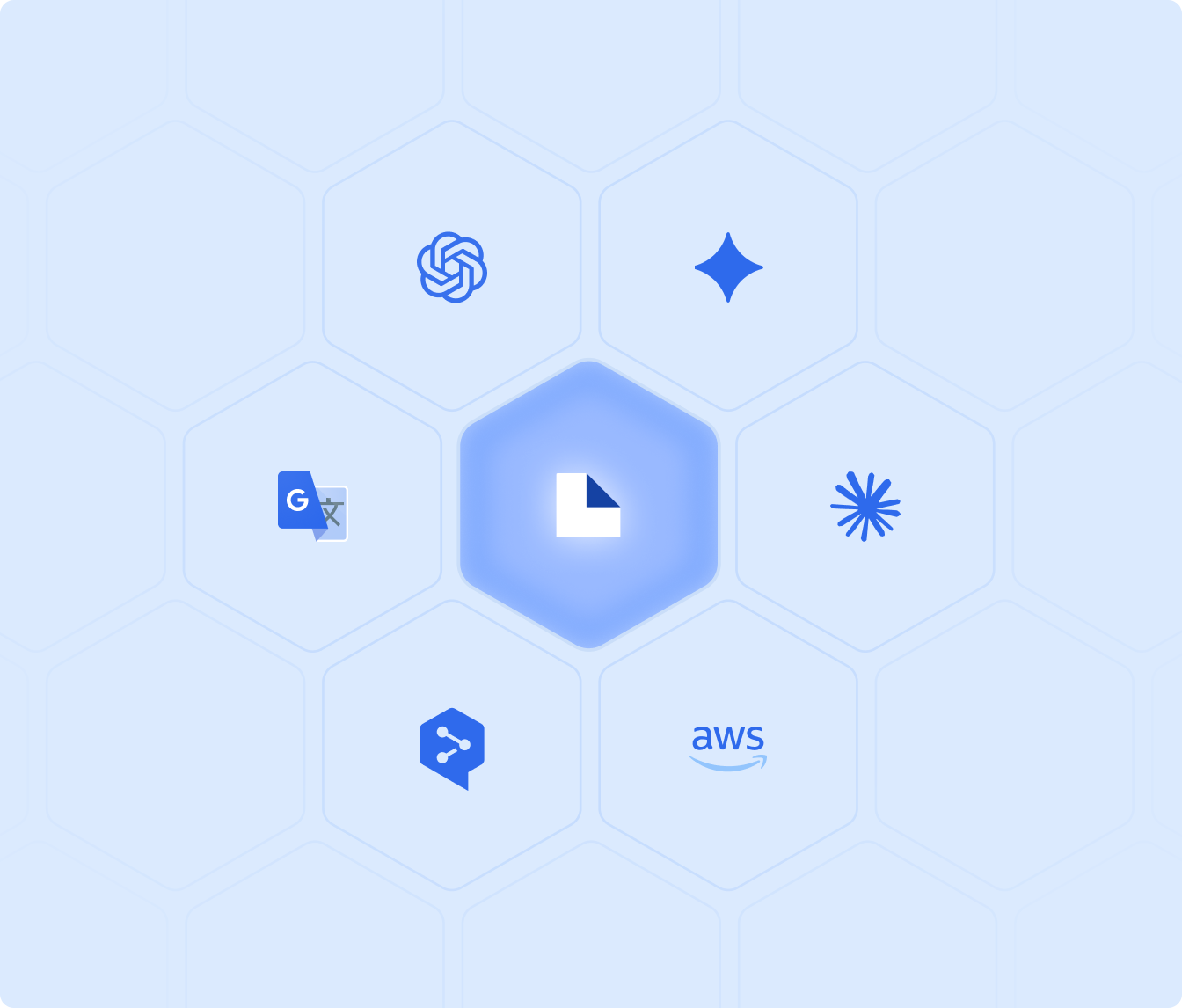
Choose from leading large language models and machine translation engines.
AI models (LLMs)
Claude, Gemini, Mistral, OpenAI GPT
Machine translation
AWS Translate, DeepL, Google Translate V3
What is AI translation?

AI translation is the process of using artificial intelligence to translate text from one language into another. It includes neural machine translation (NMT) and large language models (LLMs), which analyze language patterns to generate translations. AI translation can be used for websites, software, applications, documents, and other multilingual content.
How accurate is AI translation?
AI translation accuracy depends on the language pair, subject matter, and context available to the model. While modern AI models can produce high-quality translations, they may struggle with specialized terminology, brand-specific language, or ambiguous text. LingoHub improves consistency by providing AI models with your glossary, translation memory, style guides, and quality rules.
What is the difference between AI translation and machine translation?
Machine translation is a type of AI translation that automatically converts text between languages. Traditional neural machine translation engines, such as DeepL and Google Translate, are designed specifically for translation tasks. Large language models, such as GPT, Claude, and Gemini, can also translate text while following additional instructions and contextual information. LingoHub supports both approaches, allowing teams to select the engine that fits their project.
Can AI translation follow my company's terminology and style?
Yes. AI translation can follow company-specific terminology and writing guidelines when the necessary context is provided. LingoHub connects AI translation with your glossaries, style guides, and translation memory, helping translations follow approved terminology, tone of voice, and previously validated translations across languages.
Can AI translations be reviewed and approved automatically?
Yes. LingoHub combines AI translation with automated quality checks, review, and approval workflows. LINA, the AI inside LingoHub, can translate, check, and approve eligible content automatically based on your configured settings. Teams can also keep human reviewers involved wherever additional oversight is needed.
What is the best AI translation software for businesses?
The best AI translation software depends on your content, languages, and workflow requirements. Businesses should look for support for multiple AI models, terminology management, translation memory, quality assurance, integrations, and workflow automation. LingoHub combines these capabilities in one translation management platform, helping teams maintain consistent translations across products, languages, and content sources.

