





Skip to content

Localization that lives in Git

Branching, repo sync, API, CI, export, OTA. Locale files stay where your code is.

What you get as a developer

1

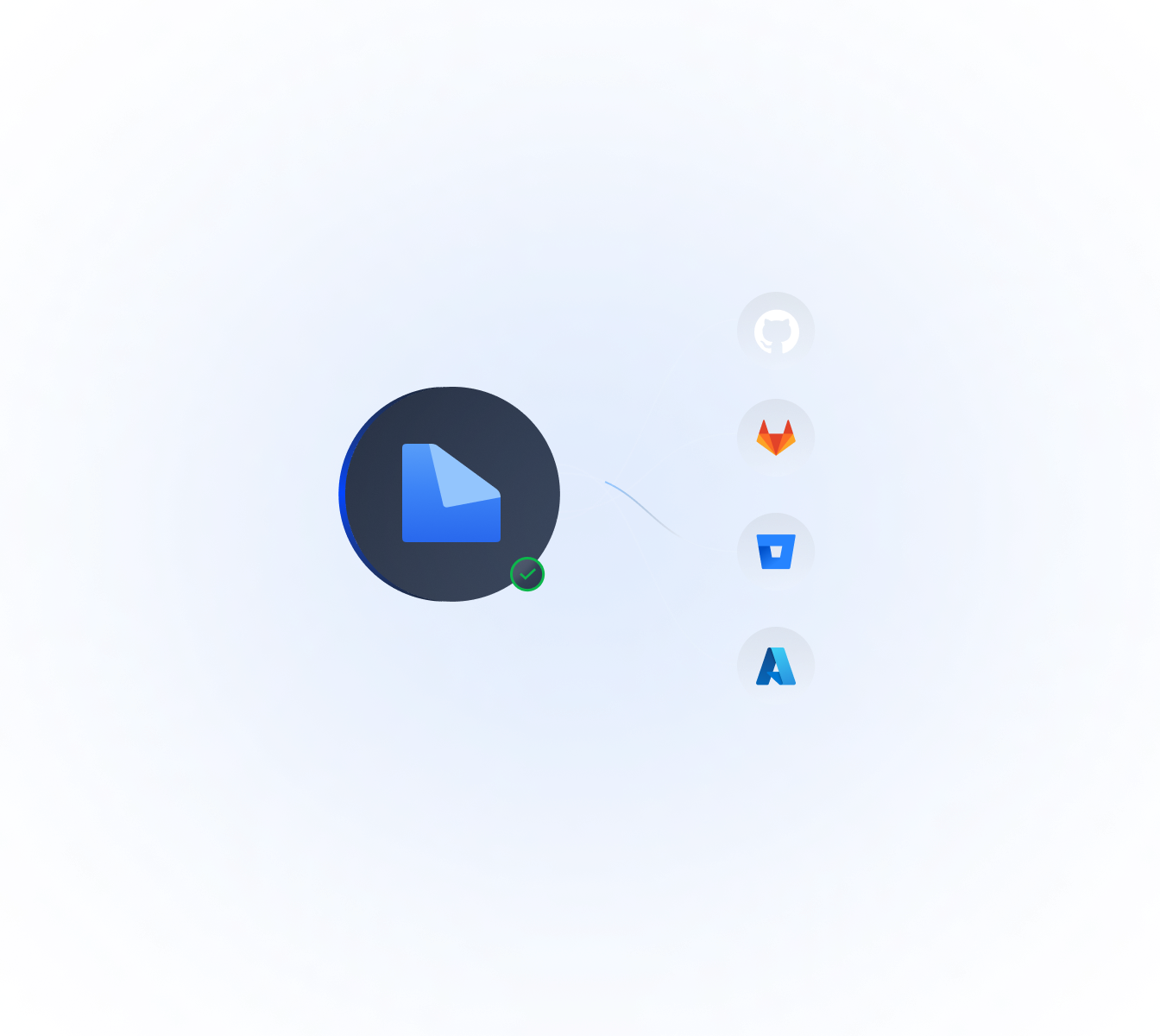
Sync localization files with GitHub, GitLab, Bitbucket, or Azure DevOps.


2

Work with feature and release branches without separating localization from development.


3

Catch placeholders, formatting, and other file issues before localized resources are synced back.


4

Connect internal tools and workflows through the REST API.


5

Support locale variants, file formats, and delivery options across web and mobile products.

LingoHub developer workflow with GitHub integration and synchronized localization branches

Built for developers

Keep localization connected to your repository

Exchange localization files with your development stack and keep branches, releases, and language updates aligned.

1

Repository integrations: Connect GitHub, GitLab, Bitbucket, or Azure DevOps for two-way localization file sync.


2

Branching: Keep feature and release branches separate and return translated files to the right destination.


3

Platform-ready exports: Work with supported iOS, Android, web, and other localization file formats.


4

Mobile SDK & OTA: Deliver language updates to mobile apps without requiring a new store release for every text change.

Dark-themed developer localization dashboard showing LingoHub integration with GitHub, GitLab, Bitbucket, and Azure DevOps for automated sync, branching support, and mobile app release workflows.

Protect files before they return to the repo

Check technical elements that need to remain intact across languages before localized resources move back into development.

1

Pluralization: Support language-specific plural rules in localized content.


2

Variables & placeholders: Detect missing or changed placeholders before they affect the application.


3

Supported formats: Work with JSON, XLIFF, Gettext PO, i18next, React Intl, Java, Java Spring, and other supported localization formats and frameworks.

Fit localization into your engineering setup

Use APIs, locale configuration, and access controls to connect localization with the way your team already works.

1

REST API: Connect internal tools and localization workflows through the public API.


2

Locale management: Configure regional variants, language mappings, and locale-specific requirements.


3

Role-based permissions: Control access by workspace, project, and language.

LingoHub developer workflow with API access, locale management, and role-based permissions

Integrations that fit your localization workflow

Connect repositories, development tools, and delivery systems to the same localization workflow.

“LingoHub has completely streamlined our localization workflow by automating the synchronization between our code repositories and translators, saving our developers countless hours of manual file handling and debugging. Ultimately, it removed technical barriers, empowering our global open-source community to effortlessly localize Rocket.Chat without needing to touch a single line of code.”

Milton Rucks

Product Manager, Rocket.Chat

Bring your localization team on board

For managers

See project status, review progress, and the work that needs attention before the next release.

For marketers

Keep campaign language and product terminology aligned across channels.

For enterprises

Manage localization with roles, audit trails, security, and deployment options for larger organizations.

Language you can ship. Start localizing now.

Free 14-day trial. No credit card required.

Glossary, translation memory, and QA on every string.

LINA drafts. Your team approves what matters.

The next release matches the last one.

Frequently asked questions

Got questions? We have the answers.

Which repositories and apps does LingoHub support?

Expand FAQ-entry Icon

LingoHub integrates with development, design, content, and support tools including GitHub, GitLab, Bitbucket, Azure DevOps, AWS CodeCommit, Figma, Contentful, Storyblok, HubSpot, Stripo, Slack, Zendesk Help Center, and Crisp Helpdesk. See our integrations page for the current list.

Does LingoHub support branch-based localization workflows?

Expand FAQ-entry Icon

Yes. LingoHub supports branch-specific synchronization, allowing teams to localize features independently while keeping release and development branches organized.

Does LingoHub connect with my design tools (like Figma)?

Expand FAQ-entry Icon

Yes. LingoHub integrates with Figma through a dedicated plugin. Select the content you want to localize and send it to your LingoHub project for translation and review.

Which localization file formats and frameworks are supported?

Expand FAQ-entry Icon

LingoHub supports more than 40 localization file formats and frameworks, including JSON, YAML, XLIFF, Gettext PO, Android XML, Apple iOS formats, CSV, DOCX, SRT, VTT, i18next, React Intl, Flutter ARB, and Java property files.

Does LingoHub provide an API for custom workflows?

Expand FAQ-entry Icon

Yes. LingoHub offers a public REST API that allows teams to automate localization tasks, manage projects, and integrate localization workflows into existing development environments.

Can LingoHub support custom integrations or file formats?

Expand FAQ-entry Icon

If you need an integration, workflow, or file format that is not currently supported, contact our team to discuss your requirements and available options.