AI agents: The 2026 guide for the translation industry
AI translation
Table of content

Artificial Intelligence has advanced far beyond simple chatbots or automation scripts. They are transforming teams’ operations by managing workflows, making decisions, and performing complex tasks autonomously. In the localization industry, these intelligent systems understand context, adapt to change, and continuously learn from experience, rather than simply following commands.
AI agents can process large volumes of content, consistently apply style guides, route ambiguous segments to human reviewers, and automatically track costs and deadlines. This enables localization professionals to concentrate on creative decisions, cultural nuances, and strategic planning, ensuring that content is accurate and culturally relevant.
In this guide, we will explore AI agents, their functions, the various types that exist, and how organizations can utilize them to enhance efficiency, accuracy, and scalability. Whether you are a business leader, developer, or technology enthusiast, this guide will help you understand how AI agents are redefining the modern work environment in 2026 and beyond.
An AI agent is autonomous software that observes its environment, makes decisions, and takes action to achieve specific goals without constant human input. It functions like a smart teammate, handling repetitive or analytical tasks while humans focus on strategy and decision-making.
AI agents operate continuously, perceiving data, reasoning about the best approach, acting on decisions, and tracking progress. By learning from feedback, they can translate content, generate reports, manage workflows, and improve over time.
Unlike traditional automation, AI agents handle complex, multi-step tasks. For example, in a global localization workflow, an agent can identify source content, apply translation memory and style guides, perform quality checks, and generate reports autonomously. They integrate multiple tools, analyze large datasets, and adapt strategies in real-time, making them capable of managing sophisticated tasks efficiently.
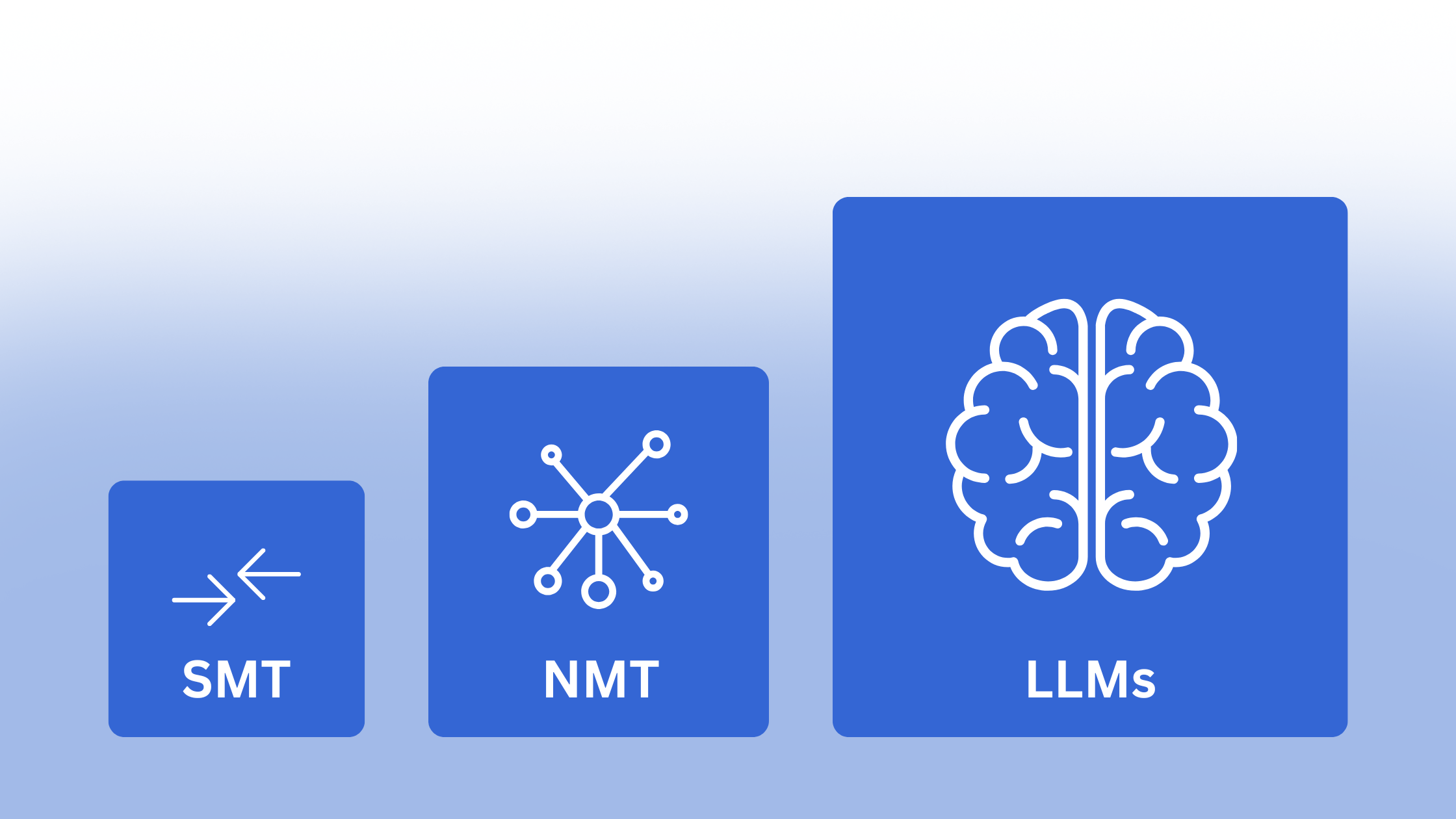
Over the past few decades, the translation industry has undergone significant evolution. It has progressed from basic rule-based systems to complex neural networks and now to highly versatile Large Language Models (LLMs). Today’s AI-powered translation tools are more sophisticated and capable than ever before, delivering faster, more accurate, and context-aware results.
AI agents differ in complexity based on their memory, reasoning, and decision-making abilities. Some respond only to the present moment, while others plan ahead and optimize outcomes.
Type | How it works | Analogy to the translation industry |
|---|---|---|
Simple reflex agent | Responds only to current inputs based on predefined rules, without memory or learning. | A basic machine translation system that automatically converts text word-for-word without considering context or previous translations. |
Model-based reflex agent | Maintains an internal model of the world to make informed decisions in partially observable environments. | A translation tool that references a style guide and translation memory to make consistent choices for recurring phrases, even when encountering new text segments. |
Goal-based agent | Sets and pursues specific goals, evaluating multiple strategies to reach them. | A localization manager plans projects by selecting the best combination of human translators, translation memory, and machine translation to meet deadline and quality targets. |
Utility-based agent | Chooses the action that provides the highest expected benefit among different options. | A translation platform determines whether to utilize a fast, low-cost machine translation or a human-validated translation, based on budget, quality requirements, and project urgency. |
Learning agent | Improves its performance over time through feedback and experience. | A translation AI that adapts its phrasing and terminology preferences based on editor corrections and client feedback, becoming more accurate with every project. |
Multi-agent system | Multiple agents cooperate or compete to solve complex problems. | A team of translation agents, where one handles terminology, another manages workflow, and a third handles quality assurance, all coordinating to deliver a multilingual project efficiently. |
Autonomous agent | Works independently to complete tasks without human intervention. | An end-to-end translation bot that retrieves content from a CMS, translates it using machine translation, applies post-editing rules, and uploads the final version without human oversight. |
Hybrid agent | Combines features for different agent types to use their strengths together. | A translation assistant that uses goal-based planning for workflows, utility-based choices for tool selection, and learning capabilities to improve accuracy over time. |
Specialized agent | Built for a specific industry or task. | A legal translation agent that knows industry-specific terminology, ensures regulatory compliance, and formats contracts correctly across languages. |
At a high level, ChatGPT is a Large Language Model (LLM) designed to understand and generate human-like text. It predicts sequences of words based on patterns learned from massive datasets. ChatGPT excels at tasks such as drafting content, answering questions, summarizing text, and generating ideas. However, it does not autonomously interact with external systems, execute multi-step workflows, or make decisions based on specific goals.
An AI agent, on the other hand, takes intelligence like that of ChatGPT and adds the ability to act in the real world. Agents can access tools, integrate with company systems, execute workflows, and make decisions autonomously to achieve defined objectives. Think of ChatGPT as the brain that provides intelligence, and the AI agent as the hands and feet that apply that intelligence to real-world tasks such as generating reports, managing translations, or routing customer requests.
By understanding this distinction, businesses can better decide when to deploy LLM-based tools like ChatGPT, full-fledged AI agents, or simpler rule-based chatbots, depending on the task’s complexity, integration needs, and automation goals.
AI agents, due to their autonomous nature and extensive access to organizational data, present unique security challenges. To mitigate risks, it’s imperative to implement a robust security framework that encompasses:
Zero trust architecture: Adopt a “never trust, always verify” approach, ensuring that every access request is authenticated and authorized, regardless of its origin within or outside the network.
Data encryption: To protect sensitive information from unauthorized access, employ end-to-end encryption for data at rest and in transit.
Access controls: Implement granular access controls to restrict the AI agent’s access to only the data necessary for its operations, minimizing potential exposure.
Audit trails: Maintain comprehensive logs of the AI agent’s activities to facilitate monitoring, detect anomalies, and support forensic analysis in the event of security incidents.
Regular security assessments:
Conduct periodic security audits and vulnerability assessments to identify and address potential weaknesses in the AI agent’s deployment.
By proactively addressing these security considerations, organizations can leverage AI agents while safeguarding sensitive data and maintaining compliance with regulatory standards.
LingoHub has implemented certified security measures to safeguard all translation data.
AI agents are utilized across various industries to automate complex, repetitive, or data-intensive tasks. Common applications include:
Localization and translation: Maintain brand consistency, send uncertain text for review, and automatically track costs.
Autonomous task management: Manage multi-step projects from start to finish.
Instant reporting: Track performance metrics and generate reports in real time.
Customer support and sales: Understand context, diagnose issues, and take action such as scheduling demos or creating tickets.
AI agents are dynamic systems that continuously learn and evolve. Most agents rely on feedback loops and data-driven insights to refine their behavior. They analyze past actions, measure outcomes against objectives, and adjust strategies accordingly.
For example, a translation agent may initially rely on pre-existing translation memory and rule-based suggestions. Over time, it can track which translations are accepted or corrected by human editors. By identifying patterns in the corrections, the agent can fine-tune its algorithms, improve terminology consistency, and reduce errors.
Learning can occur in multiple ways. Some agents use supervised learning, where human feedback directly informs their decisions. Others use reinforcement learning, where agents receive rewards or penalties based on the results of their actions. Over time, these learning mechanisms enable AI agents to optimize workflows, make informed decisions, and anticipate problems before they arise.
The result is an agent that becomes increasingly efficient, capable of handling more sophisticated tasks with minimal human intervention, while reducing the risk of repeated mistakes.
Integrating AI agents into translation and localization workflows requires careful planning and alignment with existing systems. Modern agents connect to platforms such as translation management systems, content management systems, term bases, and project tracking tools through APIs, enabling seamless access to content, glossaries, and workflow data.
Integration begins by mapping the localization process to identify where AI agents can add the most value. For example, an agent can automatically pre-fill translation memory suggestions, route ambiguous segments to human linguists, check terminology compliance, or generate quality reports. This reduces manual work and accelerates project delivery.
To ensure smooth adoption, agents are embedded directly within interfaces that translators and project managers already use. Over time, they can coordinate complex workflows across multiple languages, teams, and systems, making translation operations more efficient, consistent, and scalable.
LingoHub’s LINA enhances this integration by acting as a customizable teammate. Once equipped with context, such as style guides, glossaries, and translation memory, she can handle translations, proofreading, and rephrasing with ease and provide real-time collaboration to answer questions or flag uncertainties. She manages tasks autonomously within budgets and continuously learns from feedback to improve future translations.
Right-to-Left (RTL) support
A brilliant translation system must go beyond words, encompassing not only the meaning of words but also understanding how languages behave visually. For instance, right-to-left (RTL) languages, such as Arabic and Hebrew, require mirrored layouts, reversed text alignment, and specific character rendering rules that many traditional translation systems still struggle to accommodate. By combining automation with contextual intelligence, AI agents ensure that global content looks and feels native to every reader, regardless of script direction or writing system.
To explore these visual and linguistic challenges further, read Right-to-Left vs. Left-to-Right: Why it Matters for Localization, an in-depth look at how design, development, and translation intersect in multilingual environments.
Selecting the appropriate AI agent involves aligning its capabilities with your specific business objectives and technical environment. Begin by defining the tasks you wish to automate, be it content localization, customer support, or data analysis. Assess the complexity of these tasks to determine whether a simple reflex agent suffices or if a more sophisticated goal-based or learning agent is required.
Consider the following factors:
Integration Capabilities: Ensure the AI agent can seamlessly integrate with your existing systems, including repositories, design and support tools, CRM platforms, databases, and communication tools.
Scalability: Choose an agent that can scale with your business growth, handling increased workloads without compromising performance.
Customization: Evaluate the level of customization the agent offers to tailor its functionalities to your unique requirements.
Security and compliance: Verify that the agent adheres to industry standards for data security and complies with relevant regulations.
Vendor support and community: Opt for agents backed by robust support channels and an active user community to assist with troubleshooting and optimization.
By thoroughly evaluating these aspects, you can select an AI agent that meets your immediate needs and supports long-term business objectives.
Building an AI agent involves several key steps to ensure its effectiveness and alignment with business goals:
1. Define objectives: Clearly articulate the specific tasks and goals the AI agent is intended to achieve, such as automating customer support or streamlining data analysis.
2. Select the appropriate model: Choose a foundational model that aligns with the agent’s objectives. Depending on the task’s complexity, this could range from a simple rule-based system to a complex Large Language Model (LLM).
3. Develop the agent’s architecture: Design the agent’s architecture, incorporating components like perception (data input), reasoning (decision-making), and action (task execution).
4. Integrate with existing systems: Ensure the AI agent can interact with your organization’s existing infrastructure, such as databases, APIs, and user interfaces.
5. Implement security measures: Incorporate security protocols to protect data integrity and prevent unauthorized access.
6. Test and validate: Conduct thorough testing to validate the agent’s performance, accuracy, and reliability in real-world scenarios.
7. Deploy and monitor: Deploy the AI agent into production and establish monitoring mechanisms to track its performance and address any issues promptly.
8. Iterate and improve: Continuously collect feedback and data to refine and enhance the AI agent’s capabilities over time.
By following these steps, organizations can develop AI agents that are robust, secure, and aligned with their strategic objectives.
AI agents are typically developed using programming languages that strike a balance between flexibility, library support, and performance. Python is the most common choice due to its rich ecosystem of AI frameworks, including TensorFlow, PyTorch, and LangChain. Its readability and versatility make it ideal for developing perception, reasoning, and action components.
C++ is sometimes used for performance-critical components, such as real-time computation or system-level integration. Java and JavaScript may be employed for enterprise applications or web integration. Often, developers employ a hybrid approach, utilizing Python for AI logic while using other languages for speed, UI, or system interoperability.
The choice of programming language also depends on the complexity of the tasks, integration requirements, and the availability of talent within the organization.
Deploying AI agents necessitates a careful evaluation of ethical implications to ensure responsible and fair use. Key considerations include:
Transparency: Clearly communicate the AI agent’s capabilities and limitations to users, fostering trust and understanding.
Accountability: Establish clear lines of accountability for decisions made by AI agents, ensuring that human oversight is maintained, especially in critical applications.
Bias and fairness: Implement measures to detect and mitigate biases in AI algorithms, promoting fairness and preventing discriminatory outcomes.
Privacy protection: Adhere to data privacy laws and best practices, ensuring that personal data is handled responsibly and with consent.
Continuous monitoring: Regularly monitor AI agent performance to detect and rectify any unintended consequences or ethical concerns that may arise over time.
By integrating these ethical principles into the deployment of AI agents, organizations can enhance their credibility and foster positive relationships with users and stakeholders.
Despite their capabilities, AI agents are not perfect. They face limitations in cultural understanding, creativity, and subjective judgment. For instance, a translation agent may struggle with idioms, humor, or subtle stylistic nuances that require a deep understanding of cultural context.
Agents also rely heavily on the quality of their input data. Biased or incomplete data can lead to flawed decisions, so continuous monitoring and human oversight remain essential. Moreover, AI agents may encounter unexpected situations outside their training, requiring intervention to prevent errors.
Finally, technical limitations such as system compatibility, latency, and scalability can affect an agent’s performance in enterprise environments. Organizations must understand these boundaries and implement safeguards to maximize the benefits while mitigating risks.
AI agents are best seen as enhancement tools rather than replacements. They automate repetitive, time-consuming tasks, freeing humans to focus on strategic, creative, and relationship-driven work. For example, an AI agent like LINA ensures your content always sounds on-brand and professional by seamlessly combining translation, proofreading, and rephrasing, guided by your style guides, translation memory, and glossaries. Translators collaborate with LINA in real time to resolve questions or clarify uncertainties. At the same time, LINA manages tasks autonomously and keeps workflows within budget, allowing humans to focus on cultural nuances, context-specific decisions, and final quality assurance.
Looking ahead, agentic AI will coordinate networks of specialized agents to manage complex projects. One agent may handle content, another budgets, and a third logistics, while a coordinating agent ensures alignment. These systems self-organize, allocating tasks based on priority and expertise. Rather than replacing humans, AI agents extend human capabilities, enabling faster, more efficient, and collaborative workflows across organizations.
AI agents are transforming the translation and localization industry by bridging human expertise with intelligent automation. Tools like AI agent LINA enable translation teams to streamline workflows, maintain brand consistency, and improve quality across multiple languages with less manual effort.
These agents act as collaborative teammates, handling repetitive tasks such as terminology checks, translation memory management, and quality assurance. At the same time, humans focus on making nuanced decisions, adapting to culture, and creating original content.
By thoughtfully integrating AI agents, organizations can achieve faster, more accurate, and scalable translations. The future is one where humans and AI agents work together to deliver high-quality, multilingual content efficiently, consistently, and intelligently.
Try LingoHub for free or schedule a demo now. Discover how artificial intelligence can enhance your localization processes and internationalization projects.
AI localization: Supercharge your translation workflow
AI localization uses artificial intelligence to streamline translation workflows, improve quality, and scale global content faster. Learn more in our blog.

LingoHub develops AI agent LINA for the translation industry
LingoHub unveils LINA, an AI translation assistant developed with FH Hagenberg to enhance translation with context, precision, and human review.
AI vs human translation: The future in the collaboration
Discover how AI translation performs in practice, where it excels, and why combining AI with human expertise creates the best localization results.
From SMT to LLMs: How AI language translators have evolved
Discover how AI language translators transform global communication, remove language barriers, and support seamless cross-cultural connections in real time.
