What are multi-scripts languages?
Product localization
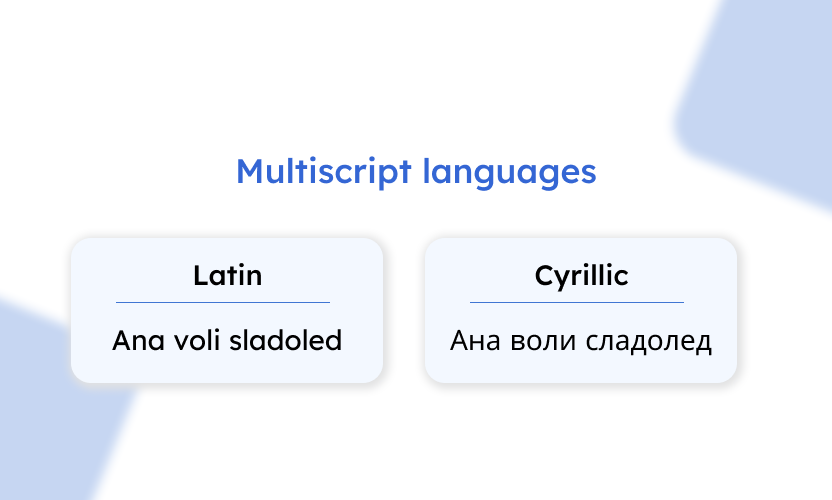
Table of content

Many languages have more than one active writing system. We call them multi-script languages. Writing systems or scripts are groups of symbols used to represent a language.
Linguists divide writing systems into specific groups by the type of symbols the speakers use.
Pictographic/ideographic writing systems
Pictographic writing systems use graphic solutions that represent words or abstract ideas, such as hieroglyphs or emojis. Pictographic writing systems are often deeply tied to the cultures they come from and require a thorough understanding of those cultures to be properly translated.
Syllabary
Syllabary writing systems use symbols that represent a syllable. Most languages that use syllabary or ideographic writing systems often have more than one writing script, which creates a significant opportunity for misinterpretation and incorrect translations.
Alphabets
Alphabets are writing systems in which a single symbol represents an individual sound. Different alphabets can be grouped based on their similarities - for example, some alphabets have only consonants or vowels, others have both, etc.
Some languages have dual alphabets - this means that the language users can use two different writing scripts or alphabets. This is called digraphia. We can differentiate two general types of digraphic languages:
Languages that use two different writing scripts at the same time
Languages where one writing script over time took precedence over another.
Examples of multi-script languages
The International Organization for Standardization created the official international standard for language codes (ISO 639-1, ISO 639-2, ISO 639-3), but also an international set of codes for defining writing scripts - the ISO 15924 system. This allows us to narrow down the language used in the text and the specific script.
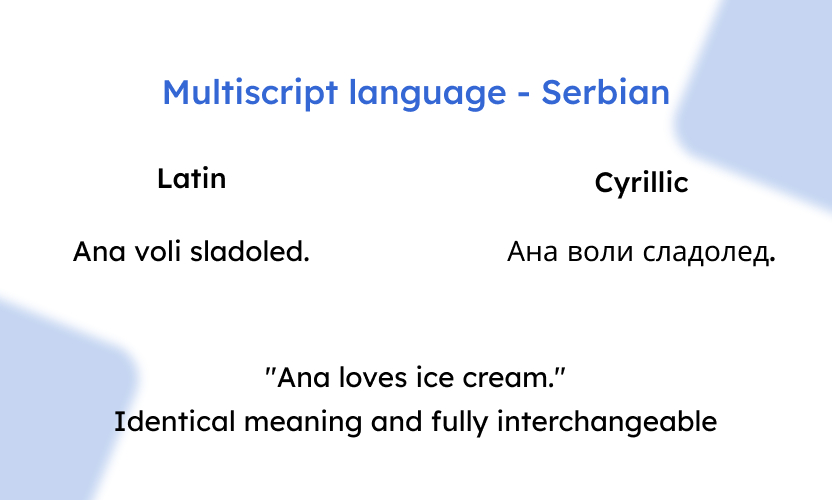
Choosing the right script for your product can prove to be tricky. Not all multilingual scripts treat different scripts as interchangeable. What does that mean? Some scripts can be used for a single type of content (for example, formal addresses or documents), while others can be used as a “common script.”
Think about your target audience as well - which script allows you to reach more people? Is it more valuable for your customers to use one script over another?

Brace yourselves, future is coming: ES6, AtScript and Angular 2.0
This article presents a summary of ES6, AtScript, and Angular 2.0. Read and learn more about the future of Angular, JavaScript, and modern web development.

Chinese, Japanese, Korean... How to localize vertical scripts?
Vertical script languages are an important part of global culture. Discover the best practices for localizing vertical text layouts in our article.

How to localize your app store descriptions
Learn why app descriptions matter for search visibility and rankings, and discover practical tips for localizing your app description effectively.
