Language barriers in global expansion: Risks and advantages
Localization strategy

Table of content

When companies decide to expand into new markets, they typically begin by following familiar checklists, which include market sizing, pricing, local regulations, and sales channels. Only later, often when campaigns underperform, or local teams complain, does another question surface: “What are language barriers actually costing us?”
Language barriers are often framed as a simple vocabulary issue: “they don’t speak our language, so we translate.” In reality, they shape how your brand is perceived, how your product is understood, and how smoothly your global organization operates on a day-to-day basis. They influence whether prospects feel confident enough to click “Buy”, whether local teams feel empowered to challenge HQ decisions, and whether your global product narrative stays coherent across dozens of locales.
For companies serious about global expansion, language is an integral part of their infrastructure. Understanding how language barriers affect communication, both between you and your customers and internally between headquarters and regional teams, is a prerequisite for sustainable growth.
At the simplest level, language barriers are obstacles that prevent people from understanding each other because they don’t share the same linguistic code, such as vocabulary, grammar, and pronunciation. This is much broader in the context of international business.
In practice, language barriers include:
Different languages (English vs. Japanese)
Different varieties of the same language (US English vs. UK English, Austrian German vs. Swiss German vs. German spoken in Germany). If you want a sense of how messy this can get at the country level, our ‘Languages in Use per Country’ checklist is a good reality check.
Different registers and jargon (legal, medical, developer, marketing)
Different cultural communication styles (direct vs. indirect, formal vs. informal)
Different semiotic systems: emojis, colors, imagery, symbols, gestures
In other words, language barriers show up whenever your message - written, spoken, or visual - does not land as intended in another market.
To design a comprehensive localization strategy, it is helpful to categorize the primary types of language barriers you’ll face.
These are the “obvious” language barriers, but even here, it’s rarely simple.
Vocabulary & terminology
Different markets use different terms for the same thing (e.g., “trainers” vs. “sneakers”; “handy” vs. “mobile phone”).
Domain-specific terminology (such as SaaS metrics, legal clauses, and medical terms) amplifies the complexity.
Concerning the latter, you also encounter loanwords, calques, and “false friends” that sound familiar but have a different meaning. If you’d like to dive deeper into that, we unpack it in our article on loanwords, calques, and cognates.
Grammar & syntax
Word order, gender, politeness levels, and plural forms can all change meaning.
Machine translation often struggles with complex syntax, resulting in subtle yet crucial errors, particularly in legal, financial, or technical content.
Spoken language & regional dialects
Dialects are tied to identity and trust. Brands that ignore regional dialects often sound foreign or out of touch.
In voice UX, customer support calls, or on-the-ground sales, dialect sensitivity can decide whether a conversation flows or collapses.
Even if your words are correct, how you communicate can also clash with local expectations.
Direct vs. indirect communication
In low-context cultures (e.g., Germany, the US), direct, explicit wording is valued.
In high-context cultures (e.g., Japan), meaning is often implied and wrapped in politeness strategies.
Copy that feels “confident” in one culture can feel rude or childish in another.
Formality & honorifics
Formality (“du”/“Sie” in German, “tu”/“vous” in French) is a minefield for brands. Choosing the wrong one instantly shifts the perceived relationship.
Power dynamics & language hierarchies
In multinationals, the headquarters language (often English) tends to dominate, leaving non-native speakers at a disadvantage in terms of information and politics.
Language barriers are also visual.
Emoji usage
Emojis are not universal. Research indicates that meanings vary significantly across cultures, platforms, and generations, and that misuse can lead to consumers engaging in mute/unfollow behavior.
Example: The “👍” emoji is generally considered positive in many Western cultures but can be perceived as offensive in certain regions, such as parts of Greece, Australia, or Brazil.
Colors
Colors carry different emotional and symbolic meanings: white may signal purity in some cultures and mourning in others; red can signify luck, danger, or political affiliation, depending on context.
Imagery & symbols
Hands, animals, religious or political symbols, even maps, can trigger unwanted associations or exclusion.
Some language barriers are created by the way your organization runs localization, rather than the words themselves. When your product UI, marketing site, Help Center, and App Store listings are all managed in separate systems, each team ends up working in its own bubble. Without shared terminology or glossaries, people start inventing their own versions of key terms. If there’s no translation memory, the exact phrase gets translated differently in every channel.
Furthermore, the ad-hoc use of machine translation without human review, an AI translation assistant that lacks context, or a straightforward quality process introduces even more variation. These barriers manifest as operational drag, rework, and an inconsistent brand voice that customers notice immediately, even if they can’t quite articulate why.
A centralized localization platform, such as LingoHub, with its robust feature set, is designed to reduce exactly this kind of fragmentation.
For global companies, language barriers are directly reflected in metrics you already track, including conversion, activation, churn, NPS, time-to-market, and employee engagement.
Customer experience: Language barriers quietly erode trust at every point of contact. Landing pages that feel “almost right” still sound slightly off when metaphors are imported, CTAs feel foreign, or legal copy is vague. Inconsistent terminology, machine-translated error messages, and onboarding that ignores local expectations result in higher drop-offs and support tickets.
Support and success: In customer support, literal translations of macros and misaligned technical jargon require agents to spend extra time clarifying their meaning, rather than resolving the issue at hand. Small choices, such as emoji usage, formality, and pronouns, directly impact whether interactions feel respectful and trustworthy.
Internal collaboration & power dynamics: When English (or another HQ language) dominates, non-native speakers may speak up less, avoid challenging decisions, or drop out of key conversations. Local insights often remain under-expressed, and strategy is disproportionately shaped by the linguistic majority, which hinders adaptation and causes headquarters to miss local nuances.
Operations & efficiency: Poor handling of language barriers creates organizational friction. Teams reinvent translations, build their own terminology spreadsheets, and copy-paste text between tools. Every release triggers a scramble of emails and files, delaying time-to-market, fragmenting messaging, and reinforcing the sense that localization is always “behind.”
Business impact: Ultimately, language barriers are not only about misunderstanding words; they translate into lost revenue, slower execution, weaker internal alignment, and greater risk.
When you zoom out, the pattern is clear: language issues are a strategic constraint. They influence who trusts you, who feels heard internally, and how fast you can ship and adapt in new markets. Treating language as core infrastructure is what turns those hidden costs into a competitive advantage.
Many organizations know they need translations. The real problems hide in the details they underestimate:
Agents “speak the language,” but their accent or dialect feels foreign and distant.
Calls and voice interfaces work technically, but tone and rhythm never quite build trust.
Languages with complex pluralization and morphology break hard-coded UI assumptions.
Missing support for gender, plural forms, and locale-specific formatting makes the copy feel “off” even when the translation is correct.
Literal translations of domain-specific terms sound naïve, making everything in English feel exclusionary.
Each market has its own unique mix of localized terms and accepted English; getting that mix wrong can make your product feel less native.
Emojis are not part of the language system.
The same emoji can read as friendly in one culture and unprofessional or inappropriate in another, subtly shifting brand perception.
A global design system assumes one color palette and visual style works everywhere.
Local symbolic meanings associated with colors, objects, or “global team” imagery can clash with what you intended to convey.
The absence of a shared translation memory, glossary, or workflow means that each team invents its own language.
Marketing, product, legal, and support drift apart; partners create unofficial translations to fill gaps.
Learning how to overcome language barriers as a global company means treating language as a system of communication, rather than a barrier. Here is what this system can look like:
Make language a strategic part of market entry by discussing target languages and variants (e.g., regional Spanish, German vs. Austrian vs. Swiss German) alongside pricing and distribution, and explicitly tie those language decisions to concrete goals, such as conversion, activation, CSAT, and time-to-resolution.
Introduce a Translation Management System (TMS):
Centralize all multilingual content instead of scattering it across spreadsheets and email.
Utilize translation memory to ensure reuse and consistency across products, websites, and documents.
Manage terminology and style within the TMS to ensure that legal, technical, and brand phrases are handled consistently.
Automate workflows and quality checks (placeholders, plural forms, forbidden terms) before release.
Balance AI translation and human expertise by using AI translation with light human review for low-risk content (like internal notes or simple FAQs), while reserving in-depth work from in-market specialists for brand-critical, legal, or complex technical content.
Build a cross-functional localization practice by tightly connecting localization, product, engineering, marketing, design, and regional teams. Involve designers and local stakeholders early to adapt layouts, icons, colors, and emoji usage, and continuously feed customer-facing insights (such as confusing phrasing or cultural mismatches) back into the localization process.
Create clear locale-specific guidance by starting from global brand guidelines and adapting them to each locale’s tone, formality, and tolerance for Anglicisms, defining explicit emoji rules with “do/don’t” examples for marketing and support, and maintaining a living glossary in your TMS so everyone works from the same shared vocabulary.
Reduce internal communication friction by encouraging concise, plain-English writing when English is the corporate language. This involves avoiding idioms and culture-specific jokes in specifications and critical documents, and summarizing key decisions in writing with localized summaries or solid translations for high-impact topics.
Measure and iterate by tracking business impact by locale (conversion, churn, support volume) alongside localization metrics, and using that data and feedback to continuously refine glossaries, style guides, workflows, and TMS configurations over time.
Overcoming language barriers means establishing a repeatable system for communicating with every market with clarity, respect, and precision. That system requires the right technology, the right people, and the right processes to support it.
LingoHub is designed precisely for this: a localization platform and TMS that helps you centralize translations, manage terminology, automate workflows, and collaborate smoothly with in-house and external linguists, all while integrating with the tools your teams already use.
If you’re ready to treat language as a strategic asset rather than a late-stage obstacle, book a demo now or explore all features and see how LingoHub can support your global expansion.
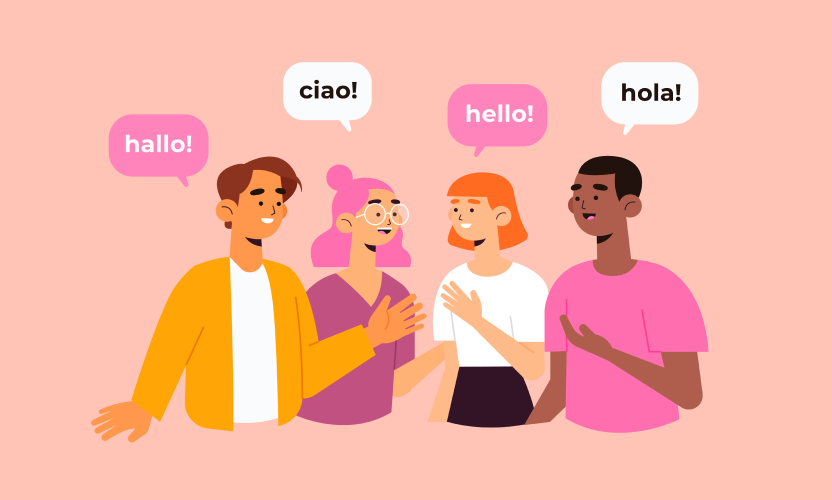
30 languages just a click away with LingoHub cloud translation
Translation order by LingoHub allows fast and high-quality translation for your software. More than 30 languages and reliable translators in a few clicks.
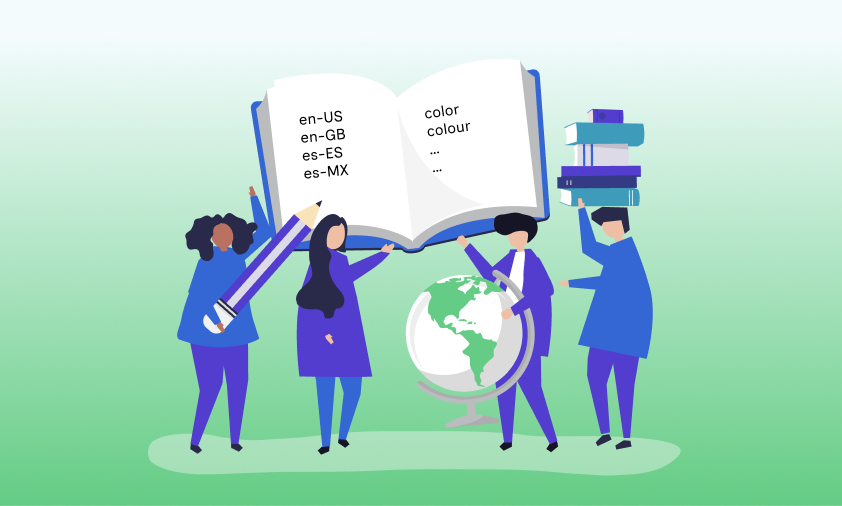
Beyond the basics: Navigating language codes for true localization
Language codes are the backbone of true localization. Discover how ISO 639 standards and regional variants shape global user experiences in our blog article.
For which languages should I localize my apps in 2023?
Looking for guidance on selecting a language for localizing your product? Check out our article which offers a list of helpful tips.
How AI language translators transform localization management
Discover how AI language translators improve localization with faster, context aware translations while helping human translators focus on quality and accuracy.
